
15-Minute Workout for Busy Nigerians: The Shortest Routine That Actually Works
FEATUREDFITNESS
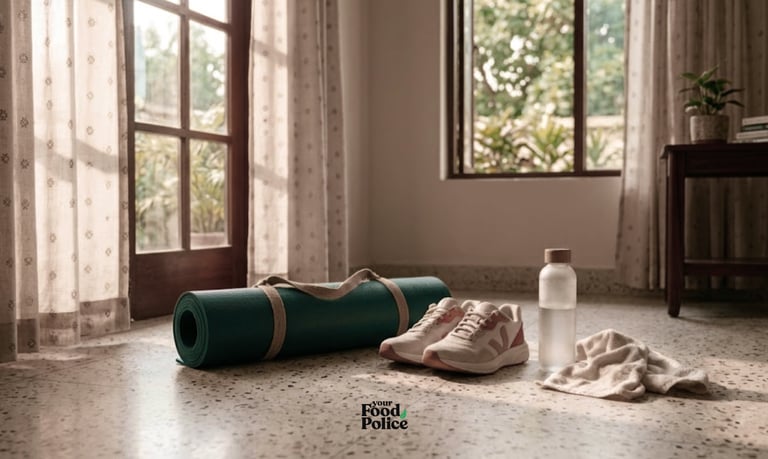

TLDR: You do not need one-hour gym sessions to get fit. Research shows that even short bursts of exercise improve heart health, blood sugar, strength, and energy - which is perfect for busy Nigerians with traffic, long work hours, and limited time
Fifteen minutes. That's all you need. Not an hour. Not 45 minutes. Not even 30. Recent research published in the British Journal of Sports Medicine confirms that short bursts of exercise, even under five minutes at a time, can meaningfully improve heart fitness, muscular endurance, and blood sugar control in adults who were previously inactive.
If you've been telling yourself you don't have time to work out, this article is about to take that excuse off the table.
I'm a nutritionist, not a personal trainer.
But nutrition and exercise are so deeply connected that I can't do my job properly without talking about movement. When clients tell me they want to lose weight, manage their blood sugar, or just feel less tired by 3pm, the conversation always includes both food and physical activity.
So let's talk about the shortest, most realistic workout routine that actually delivers results for people with busy schedules, Lagos traffic, or zero interest in waking up at 5am.
How Much Exercise Do You Actually Need Per Week?
Less than you think. The WHO's 2020 physical activity guidelines recommend 150 to 300 minutes of moderate-intensity activity per week, or 75 to 150 minutes of vigorous-intensity activity. That translates to roughly 20 to 40 minutes a day.
But here's the part most people miss: the WHO removed the old rule that said exercise had to last at least 10 minutes to count. Any duration counts. A two-minute stair climb counts. A five-minute bodyweight circuit counts. Three sets of squats while your rice is boiling? That counts.
This matters because the biggest barrier to exercise for Nigerians is not laziness. It's logistics.
A systematic review and meta-analysis published in the Journal of Public Health found that about 52% of Nigerian adults are physically inactive, with the number rising to nearly 57% among urban dwellers. Between 1995 and 2020, the number of physically inactive Nigerians jumped from 14.4 million to 48.6 million. That's a 240% increase in 25 years.
We're not inactive because we're lazy. We're inactive because our cities aren't built for walking, our commutes eat four hours of our day, our offices keep us sitting from 9am to 5pm, and by the time we get home, the only exercise that sounds appealing is lifting a remote control.
So the question isn't "how much exercise is ideal?"
The question is: what's the minimum effective dose that a real person with a real Nigerian schedule can stick to?
What Are "Exercise Snacks" and Why Should You Care?
Exercise snacks are exactly what they sound like: tiny bursts of movement spread throughout your day. Not a full workout. Not a gym session. Just one to five minutes of intentional physical effort, done two to three times a day.
A 2025 meta-analysis in the British Journal of Sports Medicine analysed 11 clinical trials involving 414 sedentary adults and found that exercise snacking significantly improved cardiorespiratory fitness with moderate certainty of evidence. Adherence was high because the time commitment was so low that people actually did it consistently.
A separate 2022 study published in Nature Medicine found that people who accumulated just 4.5 minutes of vigorous activity per day (in bursts lasting under two minutes each) had a 31 to 32% lower risk of cancer. Not 45 minutes. Not 30. Four and a half minutes, spread across the day.
Think about what this means for your life. You don't need to find a 45-minute block in your schedule. You need to find three five-minute blocks. Before your morning shower. During your lunch break. While waiting for dinner to cook. That's your workout.
The 15-Minute No-Equipment Workout (Built for Nigerian Apartments and Busy Schedules)
This routine needs zero equipment, zero gym membership, and about the same floor space as a prayer mat. You can do it in your room, your office (if you have some privacy), your compound, or your sitting room after pushing the centre table aside.
It's built on a simple structure: five exercises, three rounds, 45 seconds of work followed by 15 seconds of rest. Total time: 15 minutes. Total excuses: zero.
The Routine
Round 1, Round 2, Round 3 (repeat the same five exercises three times)
Exercise 1: Bodyweight Squats (45 seconds) Stand with your feet shoulder-width apart. Lower your body like you're sitting into a chair until your thighs are roughly parallel to the floor. Push back up. Keep your chest lifted and your weight in your heels. If your knees hurt, don't go as deep.
What it works: Quadriceps, glutes, hamstrings. Your biggest muscle groups, which means the highest calorie burn per rep.
Exercise 2: Push-Ups (45 seconds) Hands slightly wider than shoulder-width, body in a straight line from head to heels. Lower your chest toward the floor, then push back up. If full push-ups are too hard right now, drop your knees to the floor. No shame in that. Modified push-ups are still push-ups.
What it works: Chest, shoulders, triceps, core.
Exercise 3: Alternating Reverse Lunges (45 seconds) From standing, step one foot backward and lower your back knee toward the floor. Push through your front heel to return to standing. Alternate legs each rep. Hold onto a wall or chair if you need balance support.
What it works: Glutes, quads, hip stabilisers. Particularly good if you sit all day and your hip flexors are tight (which, if you work a desk job in Nigeria, they almost certainly are).
Exercise 4: Plank Hold (45 seconds) Forearms on the floor, body in a straight line, core tight. Don't let your hips sag or pike up. If 45 seconds is too long at first, hold for 20, rest, and hold again for the remaining time. Your core strength will build quickly.
What it works: Entire core, including deep stabilisers. Critical for lower back health, especially if you spend hours in Lagos traffic hunched over a steering wheel.
Exercise 5: Jumping Jacks or Fast Step-Touches (45 seconds) Classic jumping jacks if your downstairs neighbours won't complain. If you live in a flat and noise is an issue, do fast alternating step-touches instead: step your right foot out to the right while raising your arms overhead, bring it back to centre, then step left. Keep the pace brisk. The goal is to get your heart rate up.
What it works: Cardiovascular fitness, calorie burn, full-body coordination.
Rest 15 seconds between each exercise. Rest 60 seconds between rounds.
Three rounds of this takes exactly 15 minutes. You'll be breathing hard by the end of round two. By round three, you'll be earning every second of that 60-second rest.
How to Progress
Your body adapts. After two or three weeks, the routine will start feeling easier. When that happens, you have three options:
Add a fourth round (total time: 20 minutes). Slow down the lowering phase of each exercise (take 3 seconds to lower into each squat or push-up, which dramatically increases the work your muscles do). Replace jumping jacks with high knees or burpees for a bigger cardiovascular challenge.
Don't rush to progress. Consistency matters more than intensity. If you do this routine three times a week for two months, you'll notice real changes in your energy, your sleep, and how your clothes fit. I've seen it happen with my clients repeatedly.
When Should You Work Out in Nigeria?
The "best" time to exercise is whenever you'll actually do it. I know that sounds like a non-answer, but it's the truth.
That said, the Nigerian climate and daily schedule create some practical realities worth considering.
Early morning (5:30am to 7am) is the coolest part of the day, which matters a lot if you're exercising outdoors. But plenty of people can't function at 5:30am, and forcing yourself into a routine you hate is a guaranteed way to quit within two weeks. If you're a morning person, great. If you're not, don't pretend to be.
Lunchtime works well for office workers, especially if you can find a quiet conference room or an empty stairwell. A 15-minute routine plus five minutes to cool down and clean up fits neatly into a lunch break. Several of my clients in corporate environments do this and say it transforms their afternoon energy.
After work is the most popular time slot, but also the hardest to protect. Traffic, fatigue, family obligations, and the sheer mental drain of a Nigerian workday all conspire against your good intentions. If you choose evening workouts, do them immediately. Don't sit down first. Don't "rest for 10 minutes." The couch is an exercise graveyard. Walk in the door, change your clothes, do the 15 minutes, then rest.
The Nigerian heat factor: if you're exercising indoors without air conditioning (which is most of us during power outages), keep a bottle of water nearby and take your rest periods seriously. Exercising in 33-degree heat puts extra stress on your cardiovascular system. Drink water before, during, and after. If you feel dizzy, lightheaded, or nauseous, stop. That's not weakness. That's your body telling you it's overheating.
What Should You Eat Before and After a 15-Minute Workout?
For a short workout like this one, you don't need a complicated pre-workout meal or a post-workout protein shake. You need to not overthink it.
Before your workout: If you're exercising first thing in the morning, you can do this routine on an empty stomach without any issues. Fifteen minutes of bodyweight exercise won't deplete your glycogen stores. If you prefer having something in your system, a small banana or a few crackers is plenty. Don't eat a heavy meal within 30 minutes of exercising unless you enjoy feeling your garri come back up.
After your workout: Eat your next normal meal. That's it. If your next meal is an hour away, a small snack with protein works. Boiled egg, a handful of groundnuts, a cup of yoghurt. You don't need a special recovery meal for a 15-minute session. Save that energy for cooking something balanced for dinner.
The real nutrition question for busy Nigerians who start exercising is this: are you eating enough protein? Most Nigerian diets are carb-heavy (rice, yam, garri, bread) and protein-light. If you're asking your muscles to grow stronger through exercise, you need to give them the raw material to do it.
Aim for a protein source at every meal: eggs at breakfast, beans or fish at lunch, chicken or beef at dinner. That matters far more than any pre-workout supplement.
"I Don't Have Time" and Other Lies We Tell Ourselves
I hear this from clients every week. "I don't have time to exercise." And I get it. I live in Nigeria too. I know what the schedule looks like.
But let's be honest for a second. Fifteen minutes is less time than you spend scrolling Instagram before bed. It's less time than your average TikTok session. It's less time than waiting for your generator to stabilise after NEPA takes light.
The issue isn't time. It's priority. And I'm not saying that to shame you. I'm saying it because reframing the problem is the first step to solving it.
You don't need to "find time" for exercise. You need to attach it to something you already do. This is called habit stacking, and it works:
Wake up, brush your teeth, do the 15-minute routine, then shower. The workout goes between two things you already do every morning. After two weeks, it stops feeling like a decision and starts feeling like part of your morning.
Or: get home from work, change into comfortable clothes, do the routine, then start dinner. The workout becomes the bridge between work mode and home mode.
Pick a trigger. Attach the workout to it. Do it for 21 days. After that, it's no longer motivation you need. It's momentum.
Can You Lose Weight With Just 15 Minutes of Exercise?
Let's be real: exercise alone is not the most efficient way to lose weight. Nutrition controls the vast majority of your calorie balance. You can't outrun a bad diet, and you definitely can't out-squat one in 15 minutes.
But exercise does things for weight loss that diet alone cannot.
It preserves your muscle mass while you lose fat (so you lose the right kind of weight). It improves your insulin sensitivity (which means your body handles carbs better). It reduces stress hormones like cortisol (which, when chronically elevated, promote fat storage around your midsection). And it makes you feel better, which makes you more likely to stick with your eating plan.
So no, 15 minutes of exercise won't magically melt belly fat. But 15 minutes of exercise combined with eating the right amount of the right food? That's the combination that actually works. Every time.
FAQs
Can I do this workout every day?
You can, but three to four times per week is plenty for most people. Your muscles need recovery time to get stronger. On rest days, a 20-minute walk is a great alternative.
Is 15 minutes of exercise really enough to see results?
Yes, if you're consistent. Research shows that short, regular exercise sessions improve cardiovascular fitness, blood sugar control, and muscular endurance. The key is doing it consistently, not doing it for longer.
I'm completely out of shape. Can I still do this routine?
Absolutely. Modify as needed: do push-ups on your knees, reduce the plank to 20 seconds, swap jumping jacks for marching in place. Start where you are, not where you think you should be.
What if I live in a small apartment with no space?
This routine needs about 2 metres by 1 metre of floor space. If you can lie down on the floor with your arms extended, you have enough room.
Should I work out before or after eating?
For a 15-minute routine, it doesn't matter much. Just avoid exercising within 30 minutes of a large meal. A light snack beforehand is fine. Eat your normal meal afterward.
Is walking enough exercise, or do I need to do this routine too?
Walking is excellent exercise. If you walk briskly for 30 minutes most days, you're meeting WHO guidelines. This routine adds strength and muscle endurance, which walking alone doesn't provide. Ideally, do both.
