
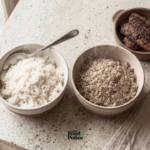


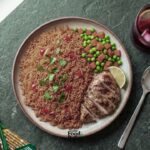



White rice is not bad for you. The real question is how much you eat, how often, and what’s sitting next to it on your plate.
Is White Rice Bad for You?
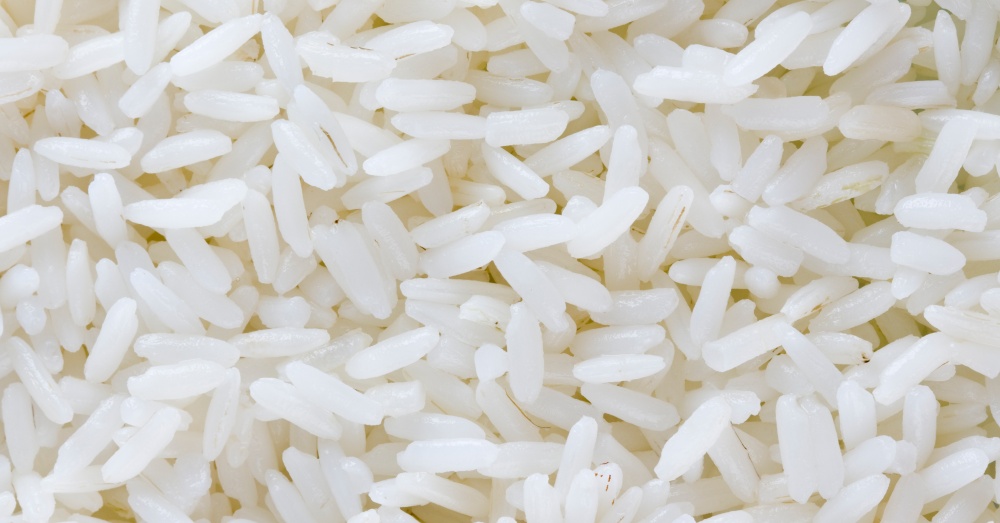
White rice is not inherently unhealthy. It’s a refined grain that gives you quick energy, and for most Nigerians eating it a few times a week alongside protein and vegetables, it fits into a normal diet without issue.
The confusion comes from mixing up “refined” with “harmful.” Refining removes the bran and germ, which does strip out some fibre and nutrients. However, that doesn’t automatically make a food dangerous, and plenty of cultures have thrived on white rice as a staple for centuries.
What matters is your total pattern.
What Nigerians Actually Lose (and Don’t Lose) When Rice Gets Polished
Brown rice keeps its bran and germ layer, so it has more fibre, magnesium, and B vitamins than white rice. White rice, on the other hand, has had that outer layer milled away, leaving mostly starch.
Here’s how a standard cooked cup (about 150g) of each compares:
| Nutrient | White Rice (cooked, 150g) | Brown Rice (cooked, 150g) |
| Calories | ~205 kcal | ~215 kcal |
| Carbohydrates | ~45g | ~45g |
| Fiber | ~0.6g | ~3.5g |
| Protein | ~4g | ~5g |
| Magnesium | ~19mg | ~84mg |
| Glycaemic Index | 70-89 (high) | 50-68 (moderate) |
| Cooking time | 15-20 minutes | 35-45 minutes |
Brown rice fills you up faster because of the fibre, and it releases glucose more slowly. But the calorie and carbohydrate counts are nearly identical, so it’s not a “diet food” versus a “fattening food” situation.
Now, here’s what most people miss. Polishing rice removes most of its natural B vitamins and minerals, which is part of why NAFDAC has been positioning fortified rice as a tool for tackling iron and vitamin A deficiencies identified in national nutrition assessments.
In Nigeria, rice fortification reports from GAIN and WFP note that anaemia affects a large share of Nigerian women and young children, and vitamin A deficiency remains widespread.
In other words, if rice is a major part of your weekly meals, buying fortified brands where available, or making sure you pair rice with vegetables, beans, and animal protein, matters more than choosing brown over white.
Does White Rice Raise Blood Sugar More Than Brown Rice?

Yes, generally. White rice has a higher glycaemic index than brown rice, meaning it raises your blood sugar faster and higher after a meal.
According toHarvard Health’s guide to the glycaemic index, white rice sits in the high glycaemic range, close to the effect of eating table sugar in terms of how quickly it spikes blood glucose.
Brown rice, because of its fibre content, sits in a more moderate range and produces a gentler rise.
A study conducted among adults in Abuja, published in the journal Ecology of Food and Nutrition, tested meals with different ratios of brown to white rice and measured blood glucose two hours after eating.
The researchers found that most participants initially rated polished white rice as superior in quality and taste compared with brown rice, but the blood sugar readings told a different story depending on the blend used.
Does How You Cook Rice Change Its Blood Sugar Effect?
Yes, and this is where it gets interesting. Boiling time changes the glycaemic index of rice, and so does what you do with it after cooking.
A 2024 study using the ISO in vivo testing method found that extended boiling increased the glycaemic index across every rice type tested, with white round grain rice showing the sharpest rise.
Whole grain long-grain rice kept the lowest overall glycaemic index despite its own increase, largely because of its higher fibre and amylose content.
Meanwhile, cooling cooked rice does the opposite. A clinical trial found that white rice cooled for 24 hours in the fridge and then reheated produced a significantly lower blood sugar response than rice eaten fresh off the stove, based on research published on PubMed.
The cooling process converts some of the starch into a form your body can’t fully digest, which behaves more like fibre.
So, if you’re meal-prepping your rice ahead of time, you may be doing your blood sugar a favour without realising it.
Is Brown Rice Better for Weight Loss?
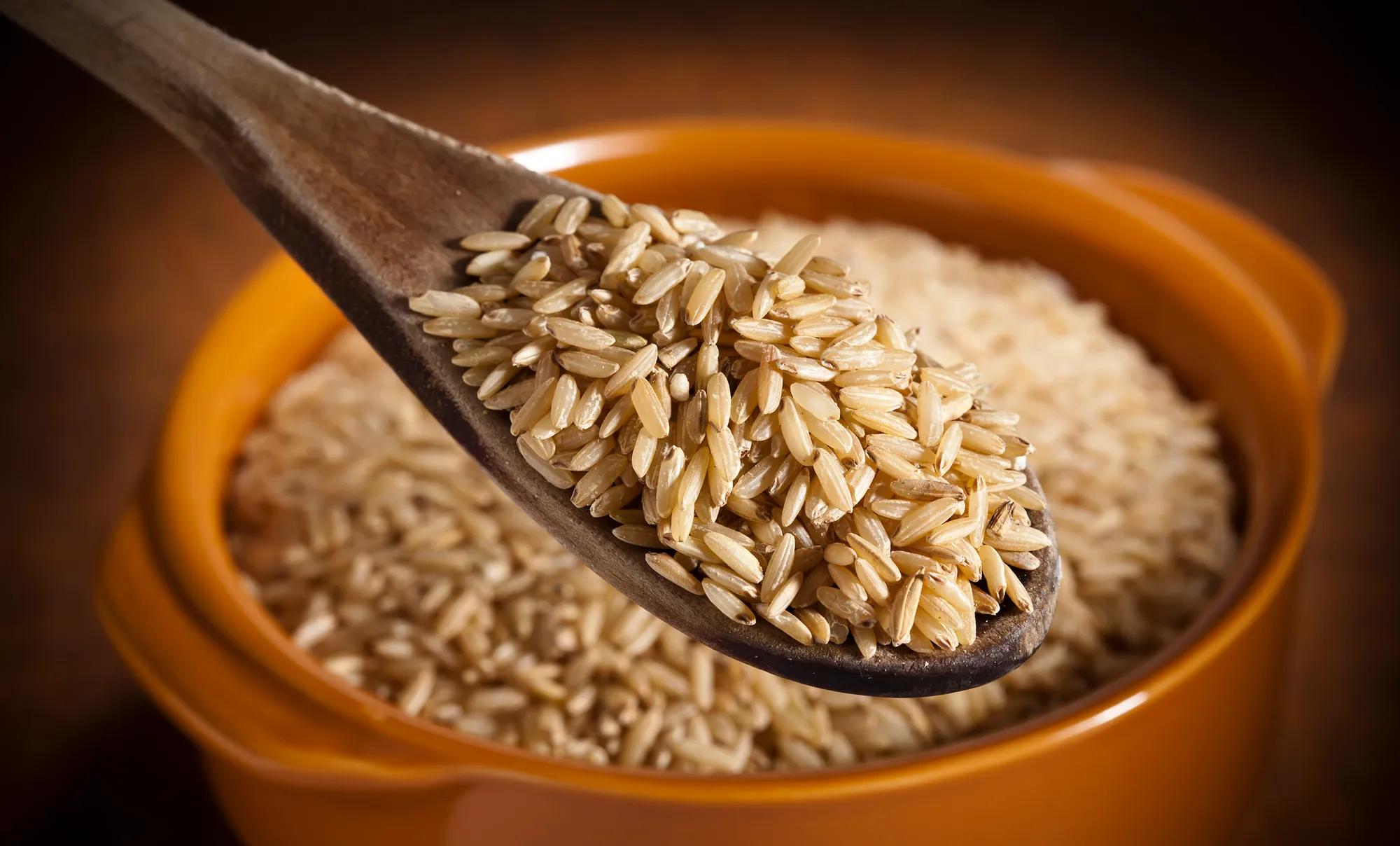
Not by much, and definitely not on its own. Brown rice has slightly more fibre, which helps you feel full longer, but the calorie difference between a cup of white and brown rice is small.
Weight loss comes down to your total calorie intake over time, not which grain colour is on your plate. If you eat a huge bowl of brown rice with fried meat and a sugary drink, you can still gain weight. Portion size matters far more than the rice itself.
That said, the fibre in brown rice can help with satiety, which may make it easier to eat less overall without feeling deprived. If you struggle with portion control, brown rice can be a useful tool, but it’s not magic.
How to Make White Rice Healthier Without Switching to Brown Rice
You don’t need to abandon white rice to eat better. A few small changes make a real difference without changing your grocery bill or your cooking habits.
First, watch your portion size rather than eliminating rice altogether. Second, pair rice generously with vegetables and protein instead of letting it dominate the plate.
Third, try the cook-cool-reheat method mentioned earlier when your schedule allows, since it lowers the blood sugar impact for free. Finally, mixing in beans, as many Nigerians already do with rice and beans, boosts fibre and protein without any extra cost.
These small shifts add up more than swapping grain colours ever will.
FAQs
- Is white rice bad for weight loss?
No, white rice itself doesn’t cause weight gain. Weight is determined by total calories eaten versus burned, so portion size and what you eat alongside your rice matter more than the rice itself. - Which is healthier, white rice or brown rice?
Brown rice has more fibre and micronutrients, giving it a modest edge nutritionally. However, white rice isn’t unhealthy in normal portions, and the difference matters most for people managing blood sugar closely. - Why is brown rice so expensive in Nigeria?
Brown rice is less commonly grown and processed locally, so most of what’s available is packaged and sold in small bags through supermarkets rather than bulk sacks at the market. This pushes the per-kilogram price well above local white rice.