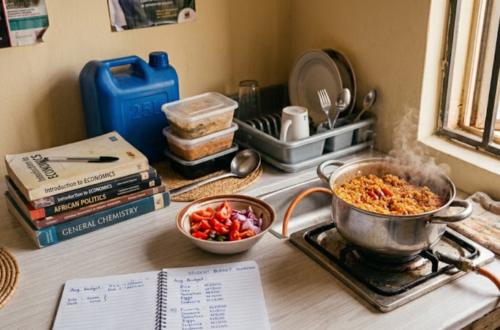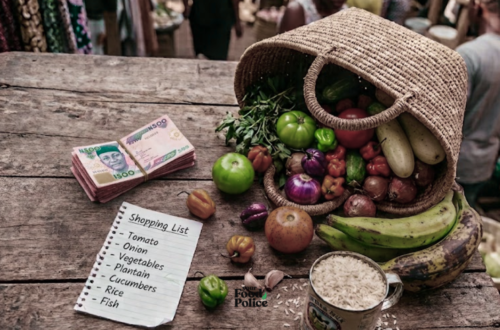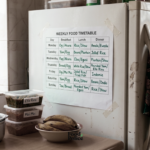




A Nigerian food timetable is a weekly plan that tells you what to eat for breakfast, lunch and dinner every day, using everyday Nigerian meals like efo riro, moi moi and jollof.
Below is a free 7-day timetable I planned as a nutritionist, plus how to make it work on a real Naija budget.
Because, tbh, asking “what can I eat today?” three times a day is a full-time job. A paid one A very unpaid one.
Key takeaways
- A Nigerian food timetable removes the daily stress of deciding what to eat by planning all 21 meals of the week in advance.
- Nigeria’s food-based dietary guidelines recommend grains or tubers plus vegetables or fruits at every meal, with oil, salt, seasoning cubes and sugar kept low.
- Cooking one stew, one soup and a beans or moi moi batch on Sunday turns most weekday meals into quick reheats.
- Beans, eggs and small fish are the cheapest ways to keep protein in your timetable when food prices are high.
- Swallow fits a healthy food timetable as long as each portion stays about the size of your fist.
What is a Nigerian food timetable?
A Nigerian food timetable is a written schedule of what you’ll eat at each meal for the week, built from local foods you already know. Think of your old school timetable, except the only exam is “did you eat well today?”
It turns 21 daily food decisions into one planning session on Sunday.
A food timetable reduces stress because it removes the decision.
Instead of thinking about food three times a day, you think about it once a week. Then, when 7pm comes and you’re tired, you simply check the fridge door and cook what it says. (And if even cooking feels like too much this season, start with how to eat healthy when you’re too busy to cook.)
Why do most Nigerians eat the same few meals?
Most of us rotate the same handful of dishes because those are the easiest decisions.
For example, a national household survey found rice was the most frequently eaten carbohydrate in Nigerian homes, followed by bread and garri.
Likewise, one report found about 42% of Nigerians eat bread for breakfast.
Nothing is wrong with bread or rice.
However, when the same two foods show up every day, you miss out on nutrients like iron, zinc and vitamin A that come from beans, fish and leafy soups. A timetable fixes that quietly, by rotating your carbs, proteins and vegetables across the week.
The healthy Nigerian plate, explained
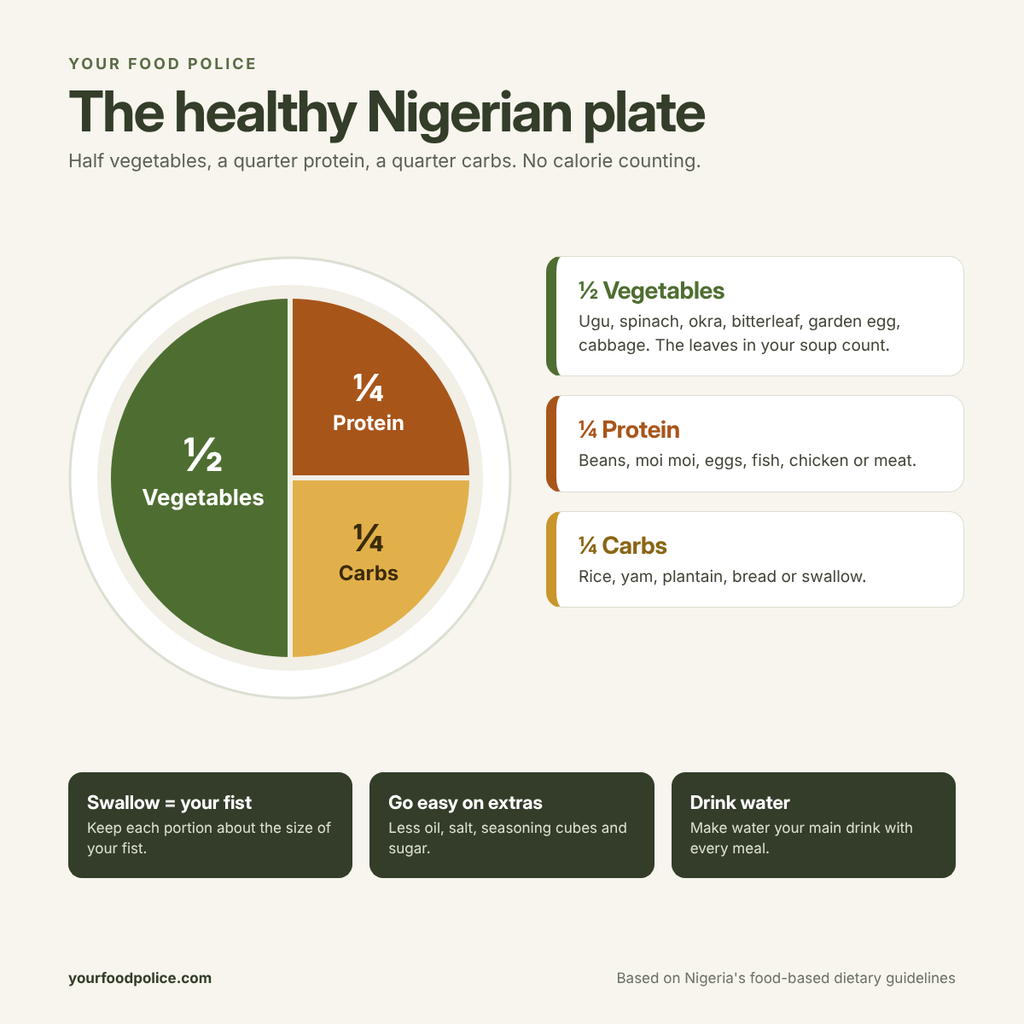
A healthy Nigerian plate is half vegetables, a quarter protein and a quarter carbohydrate, with swallow kept to about the size of your fist.
This follows Nigeria’s own food-based dietary guidelines, which put grains, tubers, fruits and vegetables at every meal and keep oil, salt, seasoning cubes and sugar low.
Those guidelines aren’t new, by the way.
Nigeria first published them in 2001, in English, Hausa, Yoruba and Igbo, through the Federal Ministry of Health and partners including WHO.
Yet most of us have never seen them. (Na wa.)
How should you fill your plate?
Here’s the simple version I use for every meal in the timetable:
- Half the plate: vegetables. Good news: the ugu, spinach, okra and bitterleaf in your soup count. Dark leafy greens like ugu also bring vitamin A, folate and iron.
- A quarter: protein. Beans, eggs, fish, chicken or meat. Protein keeps you full longer, so you’re not hunting for snacks by 4pm.
- A quarter: carbohydrate. Rice, yam, plantain, bread or swallow.
Your free 7-day Nigerian food timetable
A good Nigerian food timetable for a week rotates carbs, proteins and vegetables so no two days look the same, and it leans on one stew and one soup cooked on Sunday.
The 7-day timetable below does exactly that.
It’s Week 1 of my 90-day Naija Mix meal timetable, so it mixes dishes from across the country.
Sunday cook-up (the day before): a big pot of tomato-pepper stew, a pot of efo riro, and a batch of moi moi.
Table: A healthy 7-day Nigerian food timetable, planned by a nutritionist
| Day | Breakfast | Lunch | Dinner |
|---|---|---|---|
| Monday | Wholewheat bread + egg sauce | Rice + tomato stew + fish + steamed veg | Efo riro + amala |
| Tuesday | Boiled yam + egg sauce | Efo riro + amala | Fish pepper soup + boiled yam or plantain |
| Wednesday | Moi moi + pap or custard | Rice + vegetable sauce with chicken | Boiled plantain + vegetable sauce with fish |
| Thursday | Oats with milk, groundnuts and banana | Efo riro + amala | Eko (agidi) + moi moi |
| Friday | Roasted plantain + vegetable omelette | Spaghetti jollof with veg and fish | Abacha (African salad) + fish |
| Saturday | Akara + pap | Suya-spiced chicken + roasted plantain + salad | Efo riro + amala |
| Sunday | Okpa + pap or tea | Jollof rice + grilled chicken + coleslaw | Unripe plantain porridge |
This timetable works because the hard cooking happens once. As a result, most weekday meals are reheats or 20 to 30 minute cooks, while the nicer meals land on the weekend, when you actually have time.
Notice, too, that efo riro shows up four times. That’s on purpose. Nigerians already cook one big pot of soup and eat from it all week, so the timetable works with that habit instead of fighting it.
You can swap any meal for another one in the same week. For instance:
- No yam? Use sweet potato or plantain.
- Tired of amala? Switch to eba, semo or oat swallow.
- No fish this week? Use eggs or chicken instead.
The meal changes. Your plan doesn’t.
One Sunday cook-up, one week of meals
You cook a week of Nigerian meals in one day by batch-cooking three things on Sunday: a stew, a soup, and a beans or moi moi batch.
Those three pots cover most lunches and dinners, so weekday cooking shrinks to boiling yam, rice or plantain. Plan for about 3 to 4 hours, including the market run.
For the full method, see my Sunday meal prep system for busy Nigerian professionals.
And if you’d rather skip writing the shopping list, every week in my 90-day meal timetables comes with its own Sunday cook-up list.
The Sunday cook-up, step by step
- Check your timetable and write a shopping list. Group items by where you’ll buy them: market, supermarket or the mallam down the road.
- Shop early on Saturday or Sunday morning. Produce is fresher, and you’ll avoid the afternoon crowd at the market.
- Start the stew first. Blend your tomatoes, peppers and onions, then cook them down. Fry in a little oil instead of a full pool of it, and go easy on the seasoning cubes.
- Cook your soup while the stew simmers. Load it with leafy vegetables, then add fish or lean meat.
- Make the beans or moi moi batch last. Cook beans unsalted so you can season each meal differently later.
- Cool everything, then portion it. Use small containers, one meal per container, so you only reheat what you’ll eat.
- Label and store. Most cooked stews and soups keep about 3 to 4 days in the fridge and longer in the freezer [VERIFY: USDA FoodKeeper guidance on cooked leftovers].
What if your power supply isn’t steady?
If NEPA is consistent doesn’t cooperate, freeze most of your portions and keep only two days’ worth in the fridge.
Frozen food stays cold longer during outages. Meanwhile, bring the stew to a full boil whenever you reheat it, and throw out anything that smells sour.
How can you follow a food timetable on a tight budget?
Food is expensive, and you’re not imagining it.
As of August 2026, Nigeria’s food inflation stood at 19.57% year on year. In other words, the same basket of food costs about a fifth more than it did a year earlier. A plan helps you buy only what you’ll actually cook. (I’ve also written about what to do when healthy food is the expensive option.)
You can follow a food timetable on a tight budget by planning around protein, the most expensive part of the plate, instead of carbs. Beans, eggs and small fish should carry most weekdays, while chicken and meat move to the weekend. Batch-cooking also cuts waste, so less of your money ends up in the bin.
How does cooking compare with mama put or Chowdeck?
Cooking from a timetable usually costs less per plate than buying out. For example, a plate of rice, stew and one piece of meat at a buka can cost ₦1,500 to ₦3,000 and delivery apps add fees on top. By contrast, the same plate from your Sunday pot costs a fraction of that.
To be clear, I’m not saying never order food. Just make it a treat, not the default because you didn’t plan.
What other budget tips actually work?
- Buy staples in bulk. Rice, beans and garri are cheaper by the paint bucket or bag than by the cup.
- Shop in season. Oranges and tangerines are everywhere in October and November, and agbalumo follows from December. In-season fruit is cheaper and tastes better.
- Use every part. Leftover stew becomes tomorrow’s jollof spaghetti; soft plantain becomes plantain porridge.
Making it work for your family, hostel or region
You adjust a Nigerian food timetable by keeping the structure (Sunday cook-up, quick weekdays, nicer weekends) and changing the quantities, cooking method or dishes.
A family scales up the pots, a student in a hostel leans on no-fridge meals, and someone in Kano swaps efo riro for miyan kuka. The rhythm stays the same.
For a family
For a family of four or five, double the stew and soup and cook two protein batches instead of one.
In addition, give children smaller swallow portions and an extra fruit at breakfast. Kids also tend to eat better when they help choose one meal a week, so let them pick Saturday lunch.
For students in a hostel
Hostel cooking usually means no fridge, one burner and a tight allowance. So skip the big Sunday pot and plan meals that cook in under 30 minutes or keep well without a fridge:
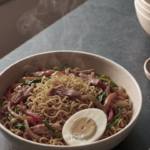
- Noodles upgraded with an egg and a handful of cabbage or carrots (use half the seasoning sachet, and here’s an honest breakdown of what’s in Indomie)
- Beans and plantain porridge, cooked in one pot
- Garri soaked with groundnuts and milk as a filling snack, not a meal replacement (wondering whether garri is bad for you? It isn’t, in the right portion)
- Boiled yam or plantain with egg sauce
For different regions of Nigeria
Someone in Enugu doesn’t cook like someone in Kano or Warri, and the timetable shouldn’t pretend otherwise. Keep the same weekly rhythm, then rotate your region’s soups:
- South-West: efo riro, egusi, ewedu and gbegiri, ila
- South-East: oha, ofe owerri, ofe nsala, onugbu
- South-South: afang, banga, owo soup, Edo black soup
- North: miyan kuka, miyan taushe, miyan zogale, miyan kubewa
Want all 90 days already planned for your region? My What Can I Eat Today? meal timetables come in five editions: Naija Mix, South-West, South-East, South-South and North.
FAQs
Is a food timetable the same as a diet?
No. A food timetable simply plans what you’ll eat and when, so you stop deciding at every meal. It has no calorie targets and doesn’t cut out Nigerian foods.
Is it bad to eat rice every day in Nigeria?
Eating rice every day isn’t bad on its own, but eating only rice crowds out other nutrients. Keep rice to a quarter of your plate, rotate it with yam, plantain and swallow, and try ofada or brown rice for extra fibre.
What is a healthy Nigerian breakfast?
A healthy Nigerian breakfast includes a protein, not just a carbohydrate. Good options are moi moi with pap, eggs with wholewheat bread, akara with pap, or oats with milk, groundnuts and banana.
Can I eat swallow at night?
Yes, you can eat swallow at night. What matters most is the portion: keep it about fist-sized with a vegetable-rich soup, and eat it at least two hours before bed if heartburn bothers you.
Start this Sunday
Screenshot the 7-day timetable above, then write this Sunday’s shopping list for one stew, one efo riro and a moi moi batch. That’s it. Monday-you will thank Sunday-you.
And when Week 1 is done and you’re back at the fridge asking “what can I eat today?” (we both know you will), I’ve planned the next 89 days too.
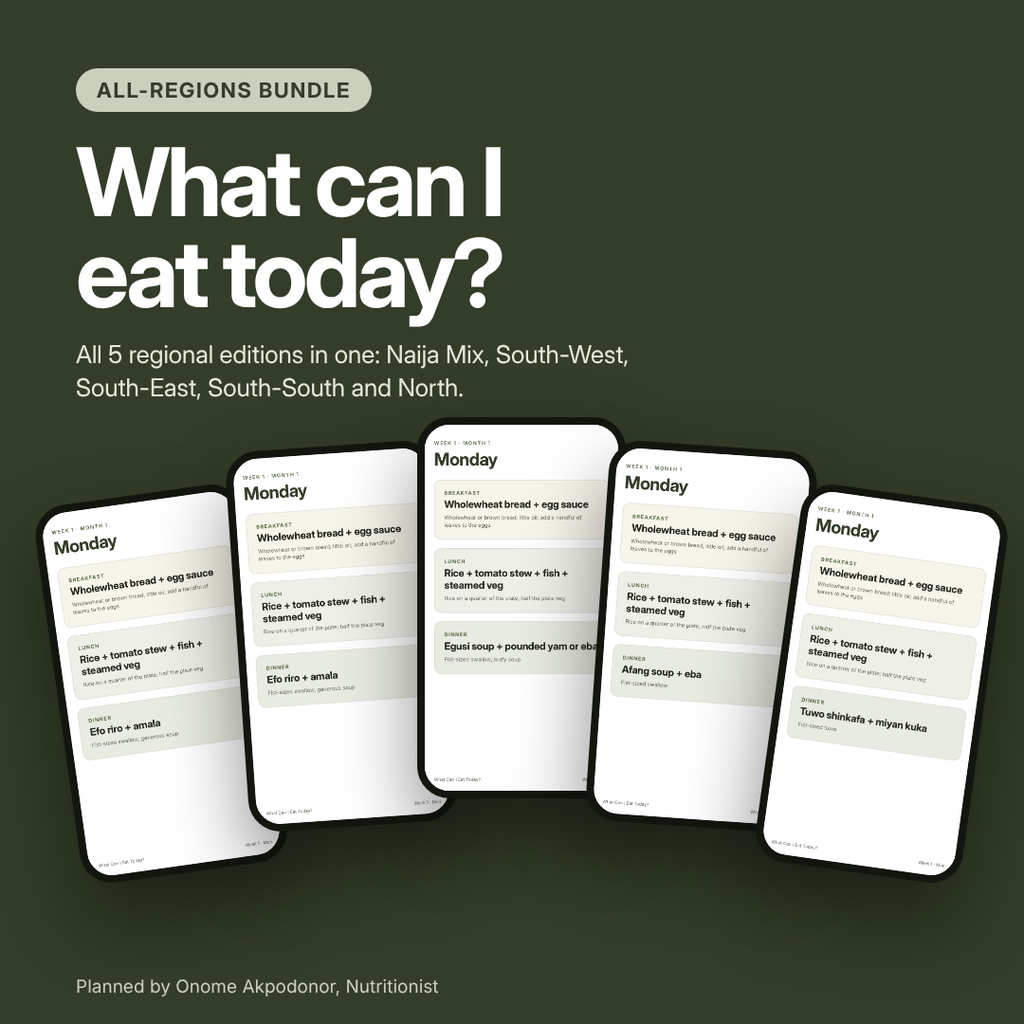
What Can I Eat Today? is my 90-day Nigerian meal timetable. It covers breakfast, lunch and dinner for 13 weeks, with a Sunday cook-up plan, a healthy tip under every meal, and easy swaps. You can also pick your region: Naija Mix, South-West, South-East, South-South or North.