





You don’t need imported protein powders or fancy superfoods to build a powerful protein smoothie. Nigeria’s markets are packed with affordable, protein-rich ingredients that work just as well, if not better.
A protein smoothie is a blended drink that combines fruit, liquid, and a significant protein source, typically hitting between 20 and 40 grams of protein per serving. It is a meal in a cup. Unlike a regular fruit smoothie, it’s specifically designed to support muscle repair, keep you full longer, and fuel your body after exercise.
In most parts of the world, people assume you need a tub of whey protein to make this happen. However, that assumption ignores a huge variety of whole-food protein sources that are sitting right in your local market. In Nigeria, especially, the options are surprisingly good.
Why Do Nigerian Ingredients Work So Well for a Protein Smoothie?
Nigeria sits in the tropical zone, which means an abundance of nutrient-dense fruits, legumes, seeds, and dairy products that are naturally rich in protein. Beyond that, the local diet has always included high-protein staples, groundnuts, beans, milk, eggs, and soy, which blend beautifully into a smoothie without tasting odd.
Whole-food protein sources come bundled with fibre, healthy fats, vitamins, and minerals. As a result, you’re not just getting protein, you’re getting a full nutritional package in every sip.
What Are the Best Local Protein Sources to Put in a Nigerian Protein Smoothie?
Animal-Based Options
| Ingredient | Protein per Serving | Where to Find It | Notes |
| Whole cow milk (1 cup / 240ml) | ~8g | Supermarkets, roadside kiosks | Also adds calcium and fat for creaminess |
| Plain yoghurt / sour milk (1 cup) | ~10–12g | Supermarkets | Greek-style variants offer more protein |
| Eggs (2 large, raw or soft-cooked) | ~12g | Every market in Nigeria | Use pasteurised if eating raw |
| Evaporated milk (½ cup) | ~9g | Grocery stores, supermarkets | Rich and sweet; watch total calories |
Plant-Based Options

| Ingredient | Protein per Serving | Where to Find It | Notes |
| Groundnut (peanut) butter (2 tbsp) | ~8g | Open markets, supermarkets | Rich, filling, and pairs well with banana |
| Soybeans/soy milk (1 cup) | ~7–9g | Markets, some stores | Complete protein, all essential amino acids |
| Tiger nuts (½ cup) | ~4g | Open markets, hawkers | Also adds fibre and prebiotic benefits |
| Moringa powder (2 tbsp) | ~4g | Health stores, supermarkets | Also loaded with iron, calcium, and vitamin C |
Important Note: Consuming raw eggs carries a small risk of Salmonella. To minimise this risk, either use pasteurised eggs, lightly soft-boil them first, or swap them for an extra cup of yoghurt.
The Base Recipe
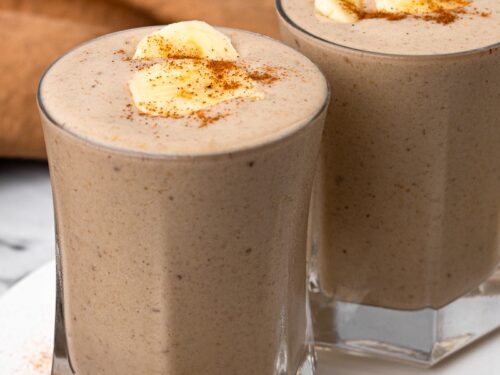
This is the core Nigerian protein smoothie recipe. It’s designed to hit around 25–30g of protein using ingredients from any decent Nigerian market.
Ingredients (1 serving)
- Banana- 1 large, ripe (base sweetener + potassium source)
- Peanut butter- 2 tablespoons (natural, no-sugar-added type is best)
- Plain yoghurt- 1 cup / 240ml (Greek-style if available)
- Whole milk or soy milk- ½ cup / 120ml (adjust thickness as desired)
- Moringa powder- 1 tablespoon (optional but highly recommended)
- Honey or 1 date- 1 teaspoon / 1 Medjool date (for sweetness; skip if banana is sweet enough)
- Ice cubes- 4–6 cubes (for texture and temperature)
Step-by-Step Instructions
- Peel and break the banana into chunks. If it’s been frozen overnight, even better, frozen bananas create a thicker, creamier texture without adding extra ingredients.
- Add the banana chunks, groundnut butter, yoghurt, and milk into the blender. Start with these as your base so the heavy ingredients blend first.
- Add the moringa powder on top. Because moringa has a slightly earthy taste, blending it with the other ingredients fully masks it.
- Add your sweetener if using. Honey, a pitted date, or a teaspoon of coconut sugar all work well.
- Add the ice cubes last so they don’t get crushed against dry powder before blending starts.
- Blend on high for 45–60 seconds until completely smooth. If it’s too thick, add a splash of water or extra milk. If it’s too thin, toss in another half banana or a tablespoon of groundnut butter.
- Pour immediately and drink within 20 minutes for best flavour. Protein smoothies oxidise quickly and start to separate if left too long.
What Are Some Tasty Variations of a Nigerian Protein Smoothie?
The base recipe is great. However, eating the same thing daily gets boring fast. Here are three variations that swap ingredients while keeping the protein content high.
| Variation | Key Swap | Estimated Protein | Flavour Profile | Best For |
| Tropical Power | Add pineapple + coconut milk; keep groundnut butter | ~22g | Sweet, tropical, slightly nutty | Morning energy boost |
| Tiger Nut Delight | Use tiger nut milk as base + yoghurt + 2 eggs | ~25g | Naturally sweet, creamy | Pre-workout or snack |
How to Make Tiger Nut Milk at Home
Tiger nut milk (kunnu aya) is one of Nigeria’s oldest natural drinks, and it’s also an excellent smoothie base. To make it, soak 1 cup of tiger nuts in water overnight, drain, blend with 2 cups of fresh water, then strain through a muslin cloth or fine sieve. That’s it. The result is a naturally sweet, slightly starchy milk that works brilliantly in smoothies.
What Does the Nutrition Actually Look Like?
Here’s an estimated breakdown of the base recipe (banana + groundnut butter + yoghurt + milk + moringa). These figures are approximate and will vary based on exact brands and portions used.
| Nutrient | Amount |
| Calories | ~420 kcal |
| Protein | ~28g |
| Carbohydrates | ~44g |
| Total Fat | ~15g |
| Fibre | ~5g |
| Calcium | ~380mg |
How Do You Boost Protein Even More Without Spending Extra?
Good news: you don’t need to spend more money to get more protein. Instead, try these smart swaps and additions that are all readily available in Nigeria.
- Add a soft-boiled egg: Two eggs add 12g of complete protein. Soft-boil them so they blend more smoothly than raw eggs.
- Use soy milk instead of regular milk: Soy milk has a higher protein content than cow’s milk per cup and is widely available in Nigerian markets and stores.
- Stir in ground soybeans: Blend raw or roasted soybeans into a fine powder and store in an airtight container.
- Double the groundnut butter: Going from 2 tablespoons to 4 tablespoons boosts protein by another 8g and adds healthy unsaturated fats.
- Add moringa every time: Moringa powder from Moringa oleifera, grown widely across northern Nigeria, provides 4g of protein per 2 tablespoons plus significant iron and vitamin C. Studies from Frontiers in Nutrition (2021) confirm moringa as a highly bioavailable protein source in whole-food form.
Final Thoughts
Making a high-protein smoothie in Nigeria is entirely possible, and it doesn’t require imported supplements, fancy health stores, or an expensive grocery list. Your local market already has everything you need.
Start simple: banana, groundnut butter, and yoghurt. From there, build confidence with moringa, tiger nut milk, or eggs. As a result, you’ll have a genuinely nutritious drink that takes under 5 minutes to make, and delivers 25–30g of complete protein.
Moreover, you’ll be eating Nigerian, using ingredients that are culturally familiar, locally sourced, and honestly delicious. That’s a win across the board.
FAQs
Q: Can I make a protein smoothie in Nigeria without a blender?
A: Yes, though the result won’t be as smooth. You can mash a ripe banana thoroughly with a fork, then mix it well with yoghurt, milk, and groundnut butter in a jar using a whisk. It will be chunkier but still nutritious. Alternatively, a cheap hand blender costs around ₦3,000-₦6,000 and works well for smoothies.
Q: Is it safe to put raw eggs in a smoothie in Nigeria?
A: Raw eggs carry a small risk of Salmonella contamination. To be safe, lightly soft-boil the eggs for 6 minutes, cool them, then blend them in. Alternatively, swap raw eggs for extra yoghurt, which provides similar protein with zero food-safety concerns.
Q: What fruits work best in a Nigerian protein smoothie?
A: Banana is the gold standard because it’s creamy, naturally sweet, and blends perfectly. Other excellent options include pawpaw (papaya), mango, pineapple, and avocado. Avocado, in particular, adds healthy fats and creates an extremely creamy texture without sweetness, great for lower-sugar versions.
When is the best time to drink a protein smoothie? The most effective time depends on your goal. For muscle building, drink it within 30–60 minutes after a workout, this is when muscles absorb protein most efficiently. For weight management, drink it as a meal replacement at breakfast to stay full until lunch. For general health, drink it whenever is most convenient; consistency matters more than timing.
Q: Can moringa powder really boost protein in a smoothie?
A: Yes, but it shouldn’t be your only protein source. Moringa oleifera contains around 27g of protein per 100g of dry leaf powder, making it one of the most protein-dense green powders available. At 2 tablespoons per smoothie, you’re getting about 4g of protein alongside significant iron, calcium, and antioxidants. Use it as a booster alongside higher-volume sources like groundnut butter and yoghurt.
Q: Is a protein smoothie good for weight loss in Nigeria?
A: Absolutely, when used smartly. High-protein drinks increase satiety significantly, meaning you feel fuller for longer. Replace a high-calorie, low-nutrient breakfast with this smoothie and you’ll likely reduce total daily calories without feeling deprived.