
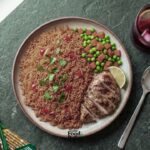


You can make a healthy jollof rice recipe that still tastes like proper Nigerian jollof. The trick isn’t cutting out rice or tomatoes. It’s fixing the oil, the salt, and the rice you’re using, three things most home cooks get wrong without knowing it.
Why Does Jollof Rice Have a Bad Reputation for Being Unhealthy?
Jollof rice isn’t unhealthy on its own. What makes a plate heavy is usually the amount of oil poured in and the type of rice used, not the tomato stew base itself.
Most people are shocked when they measure the amount of oil they use. A generous glug that looks like “just a little” can easily be 200ml or more for a family-sized pot, and that alone can add over 1,700 calories before a single grain of rice goes in.
Add refined white rice with almost no fibre, a heavy hand with salt, and low-nutrient ingredients like just tomatoes, pepper, and onions with nothing else, and you get a dish that fills you up fast but doesn’t do much for your body afterwards.
None of that is jollof’s fault. It’s how many of us were taught to cook it.
Which Rice Is Best for a Healthy Jollof Rice Recipe?

Parboiled long-grain rice is the best base for low-calorie jollof because it holds its shape, absorbs less oil, and raises blood sugar more slowly than regular white rice. This matters more than most people realise.
A Danish study on rice and blood sugar in people with type 2 diabetes found that ordinary white rice produced a glycaemic index (GI) of 55, while parboiled rice was between 39 and 46 depending on how heavily it had been processed, meaning it caused a slower, gentler rise in blood glucose.
The glycaemic indices were 55 for non-parboiled rice and 39 to 46 for parboiled rice, which was lower than white bread in every case. That’s useful for anyone managing weight, energy crashes, or a family history of diabetes.
Here’s how the common rice options stack up for a healthier jollof rice recipe:
| Rice type | Glycemic index (approx.) | Texture for jollof |
| Regular white rice (no parboiling) | 70 to 89 (high) | Breaks down, sticky |
| Local parboiled rice (Abakaliki, Mama Gold) | 50 to 60 (medium) | Firm, holds up in the pot |
| Foreign parboiled rice (Caprice, Royal Stallion) | 40 to 50 (medium-low) | Very firm, classic party jollof texture |
| Basmati rice | 50 to 58 (medium) | Long grain, less starchy |
| Brown rice | 50 to 55 (medium) | Chewy, nuttier taste |
If your pocket is tight, don’t stress about switching to basmati or brown rice. Parboiled local rice already gives you a nutritional upgrade over regular white rice, and it’s usually cheaper too.
Should You Wash Away the Starch Before Cooking?
Yes, rinse your rice two to three times until the water runs mostly clear. This washes off surface starch, which reduces stickiness and stops the rice from soaking up excess oil later in the pot.
How Much Oil Should You Use for Low Calorie Jollof?
For a pot serving six to eight people, 60 to 80ml of oil (about four to five tablespoons) is enough to fry the base and coat the rice properly. That’s roughly half of what many recipes call for, and you honestly won’t taste the difference once the pepper mix is blended well.
The old assumption is that more oil equals more flavour. It doesn’t. Flavour in jollof comes mainly from a well-reduced tomato and pepper base, good stock, and patience while it fries down, not from swimming the rice in oil.
How to Fry a Lower-Oil Jollof Base
- Blend your tomatoes, red bell pepper, and scotch bonnet with minimal added water so the mix isn’t watery.
- Heat 60 to 80ml of oil in a wide pot over medium heat, not high heat.
- Fry sliced onions until soft, then add tomato paste and fry for two minutes to cut the raw taste.
- Pour in the blended pepper mix and fry it down until the oil starts separating slightly at the edges. This step, not extra oil, is what builds real flavour.
- Add your stock, seasoning, and bay leaves, then bring to a boil before adding the washed rice.
Can You Reduce the Salt in Jollof Rice Without Losing the Taste?
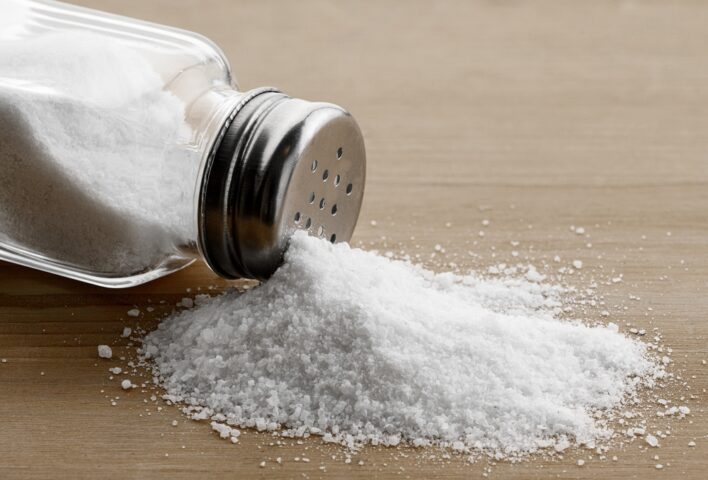
Yes, you can cut jollof’s salt content significantly by leaning on stock cubes, dried herbs, and properly reduced pepper base instead of extra salt at the end.
The World Health Organisation recommends adults keep sodium intake under 2,000mg a day, roughly one level teaspoon of salt total, for the whole day, not one meal.
WHO recommends that adults consume less than 2000mg of sodium per day, equivalent to under 5g of salt, or approximately one teaspoon.
A single heavy plate of restaurant-style jollof can already carry a third of that recommendation from salt and bouillon cubes combined.
Because of this, season in layers instead of dumping salt in once. Taste as you go, and remember that smoked fish, crayfish, or a well-made stock already add natural saltiness.
On the other hand, if you’re cooking for someone managing high blood pressure, which affects a large number of Nigerian adults, cutting bouillon cubes by half and boosting flavour with ginger, garlic, thyme, and curry powder makes a real difference without anyone noticing the dish tastes “less.”
What Can You Add to Jollof Rice to Make It More Nutritious?
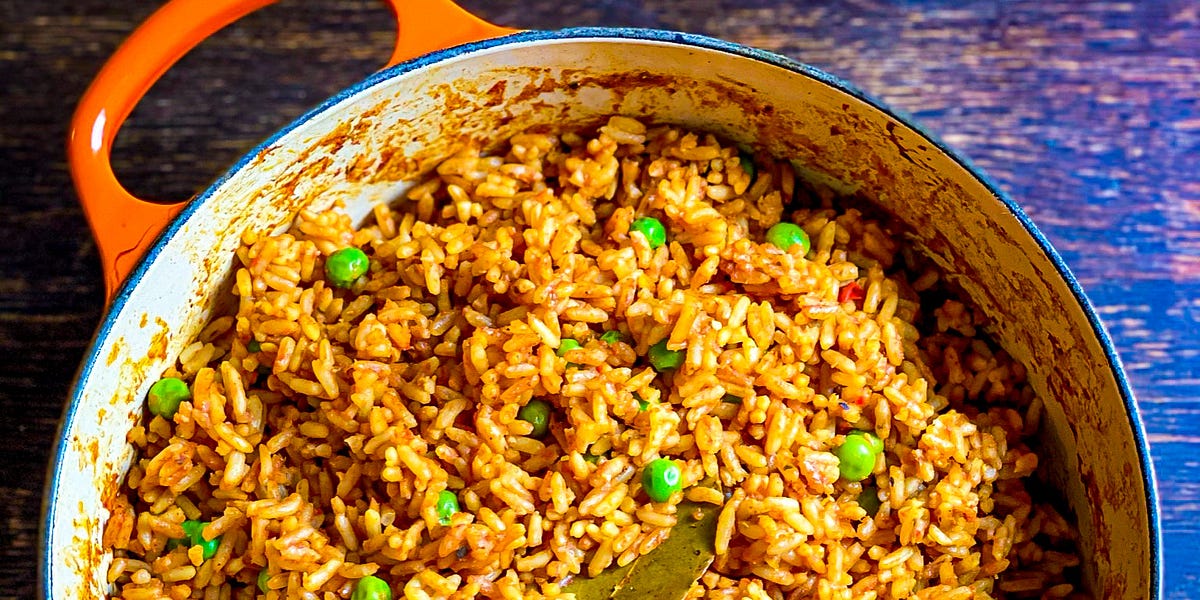
Vegetables, lean protein, and more tomatoes are the easiest ways to upgrade jollof’s nutrition without changing what it fundamentally is. A few additions worth trying:
- Carrots and green peas, stirred in during the last 10 minutes of cooking, add fibre and colour without competing with the jollof flavour.
- Grilled chicken or fish on the side instead of fried protein cuts extra oil while keeping the meal filling.
- Extra fresh tomatoes in the blend, not just paste, boost lycopene, the antioxidant compound that gives tomatoes their red colour. Interestingly, cooking tomatoes with a small amount of oil actually helps your body absorb more lycopene, not less. Adding olive oil to tomatoes during cooking substantially increased how much lycopene the body absorbed compared with tomatoes cooked without oil, so that measured oil isn’t just for taste, it’s doing nutritional work too.
- Scotch bonnet pepper, beyond heat, is genuinely nutrient-dense. A cup of sliced scotch bonnet carries over 100mg of vitamin C, more than double what most adults need in a day. A one cup serving of sliced scotch bonnet peppers, about 90 grams, provides roughly 26 calories and 107mg of vitamin C.
How Many Calories Are in a Healthy Plate of Jollof Rice?
A standard plate (about one cup, 200g) of jollof rice made with reduced oil and lean protein comes in around 300 to 380 calories, compared to 450 to 600+ calories for an oil-heavy, restaurant-style plate with fried protein on the side.
That’s the real budget-eating win here. You’re not eating less jollof, you’re just making the same amount go further without the oil weighing it down.
FAQs
- Is jollof rice good for weight loss?
Jollof rice can fit into a weight loss plan if you control the oil and pair it with vegetables and lean protein. The rice portion itself isn’t the main problem, the oil and portion size usually are. - Is parboiled rice healthier than normal white rice for jollof?
Yes, parboiled rice has a lower glycemic index and slightly more fibre than regular white rice, meaning it raises blood sugar more gradually. It also holds up better during the long simmer that jollof needs. - Can diabetics eat jollof rice?
Diabetics can eat jollof rice in moderate portions, especially when made with parboiled rice and paired with protein and vegetables to slow digestion further. Portion size and what’s eaten alongside it matter more than avoiding jollof entirely. - Does using less oil change how jollof rice tastes?
No, using 60 to 80ml of oil instead of 150 to 200ml doesn’t noticeably change the taste as long as the tomato and pepper base is properly fried down first. Most of jollof’s flavour comes from that step, not from excess oil.